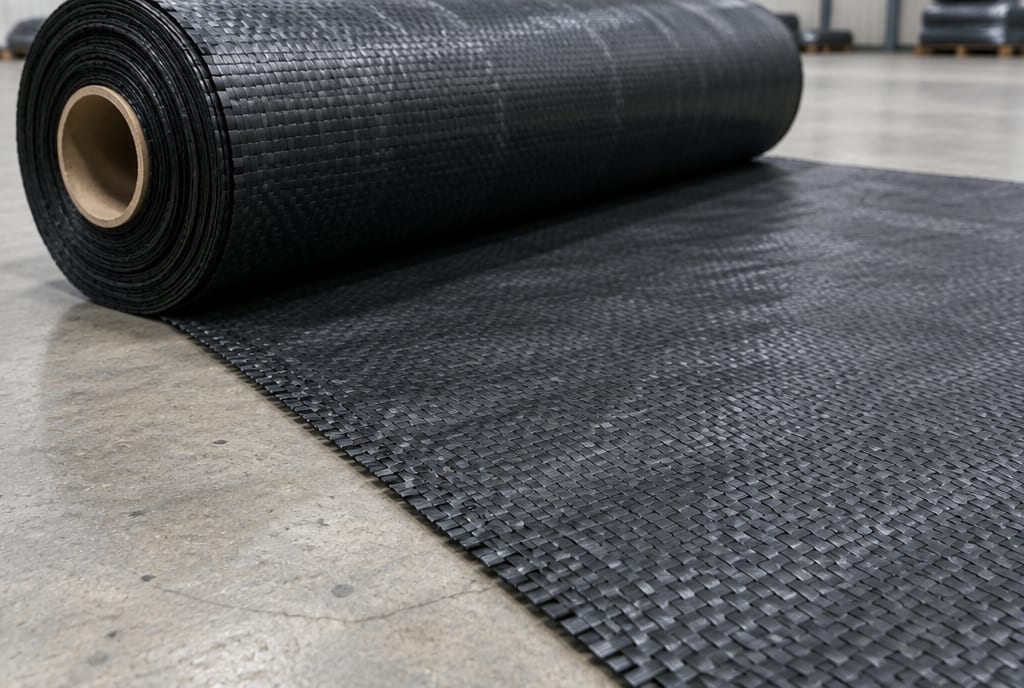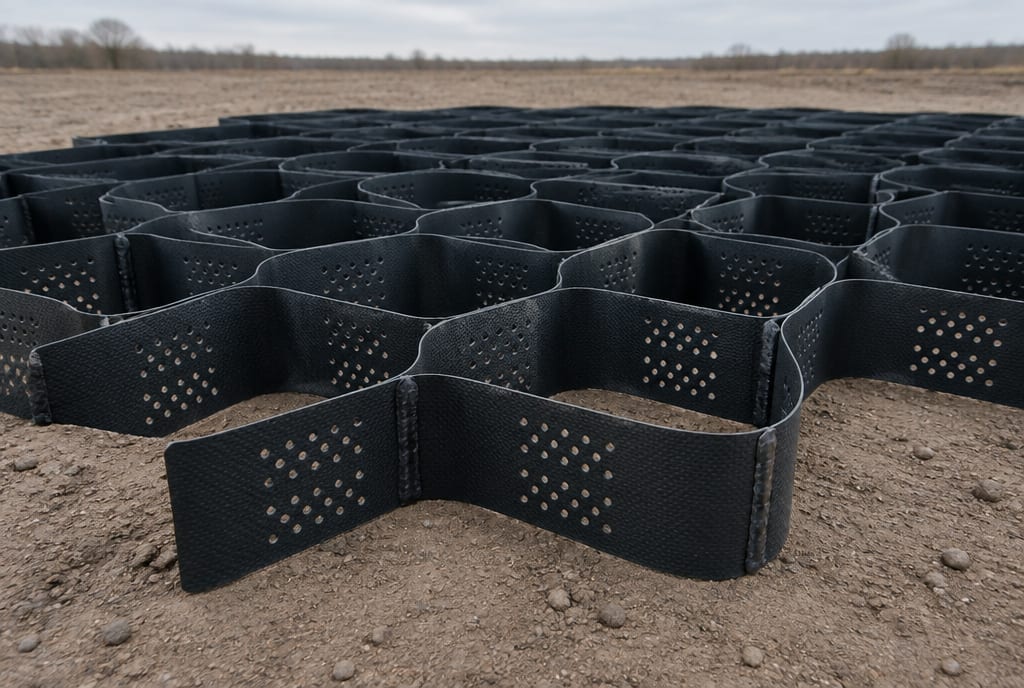
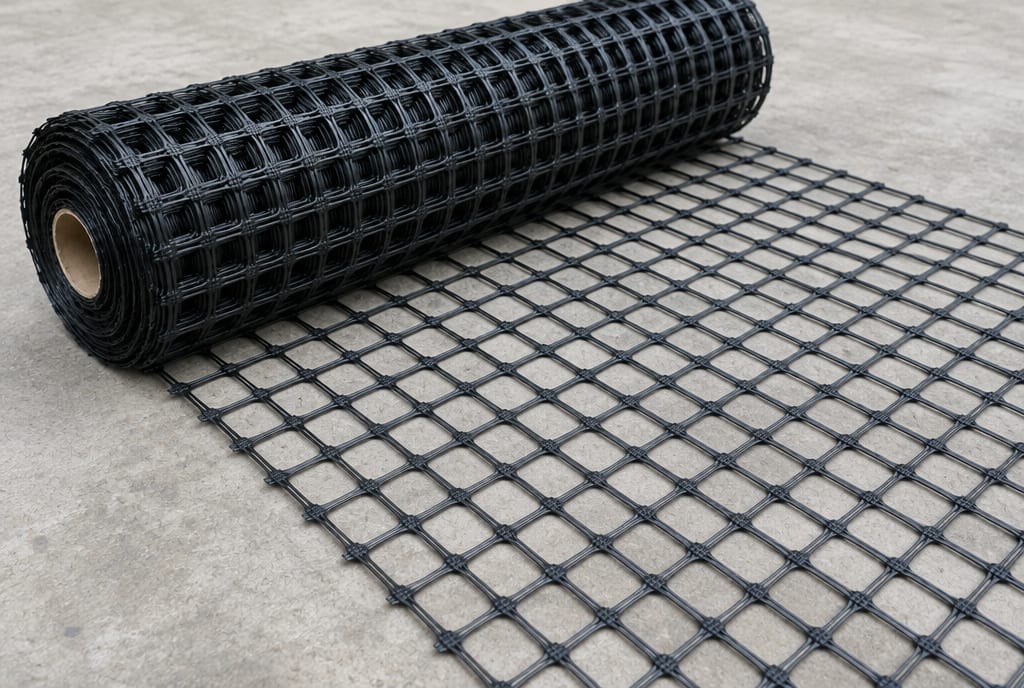
Five layers. A road on soft ground.RETECH RGG biaxial geogrid — as laid under roads, railways and yards.
Soft subgrade
Weak ground that would rut and spread under traffic on its own.
RETECH RGG geogrid
PVC-coated high-tenacity polyester. Stone locks into the apertures and the grid carries the tension the soil cannot.
Tensile on requestGranular sub-base
Compacted aggregate, confined by the grid, so the wheel load spreads over a wider area.
Base course
Dense graded base, compacted in lifts.
Asphalt surface
The wearing course. It lasts longer when the layers below do not move.
illustrationWhat it is
Uniaxial and biaxial geogrid, made by Retech Geosolutions in Gujarat and supplied across India and for export.
PVC-coated, high-tenacity polyester grid. Acts as tensile reinforcement in soil, increasing load capacity and resisting spreading. Uniaxial grids for walls and slopes; biaxial for road and rail subgrades.
Features
- High tensile strength at low elongation
- High long-term design strength
- Excellent creep resistance
- Flexible and durable
- Increased pull-out resistance
- Optimum stability at the grid junctions
- High chemical and biological resistance
- UV resistance
- High resistance to installation damage; easy to install
- Cost effective
Applications
- Uniaxial — reinforcement and stabilisation of riverside, embankment and side slopes
- Uniaxial — dyke reinforcement on soft ground: even stress distribution, higher foundation stability and load capacity
- Uniaxial — retaining walls
- Biaxial — roadbed reinforcement for roads and railways: less rutting, higher roadbed strength
- Biaxial — soil reinforcement
Uniaxial geogrid
Knitted from high-molecular-weight, high-tenacity multifilament polyester yarn and PVC-coated. The coating adds UV resistance, protects the fibres from degradation and strengthens the grid; precision knitting gives strong junctions and a high coefficient of interaction with the soil.
Uniaxial grid carries its strength in one direction: for retaining walls, embankments, side slopes and dyke reinforcement on soft ground.

Biaxial geogrid
Made the same way, but strong in both directions: it reinforces road and railway roadbeds, helps prevent cracking and raises roadbed strength.

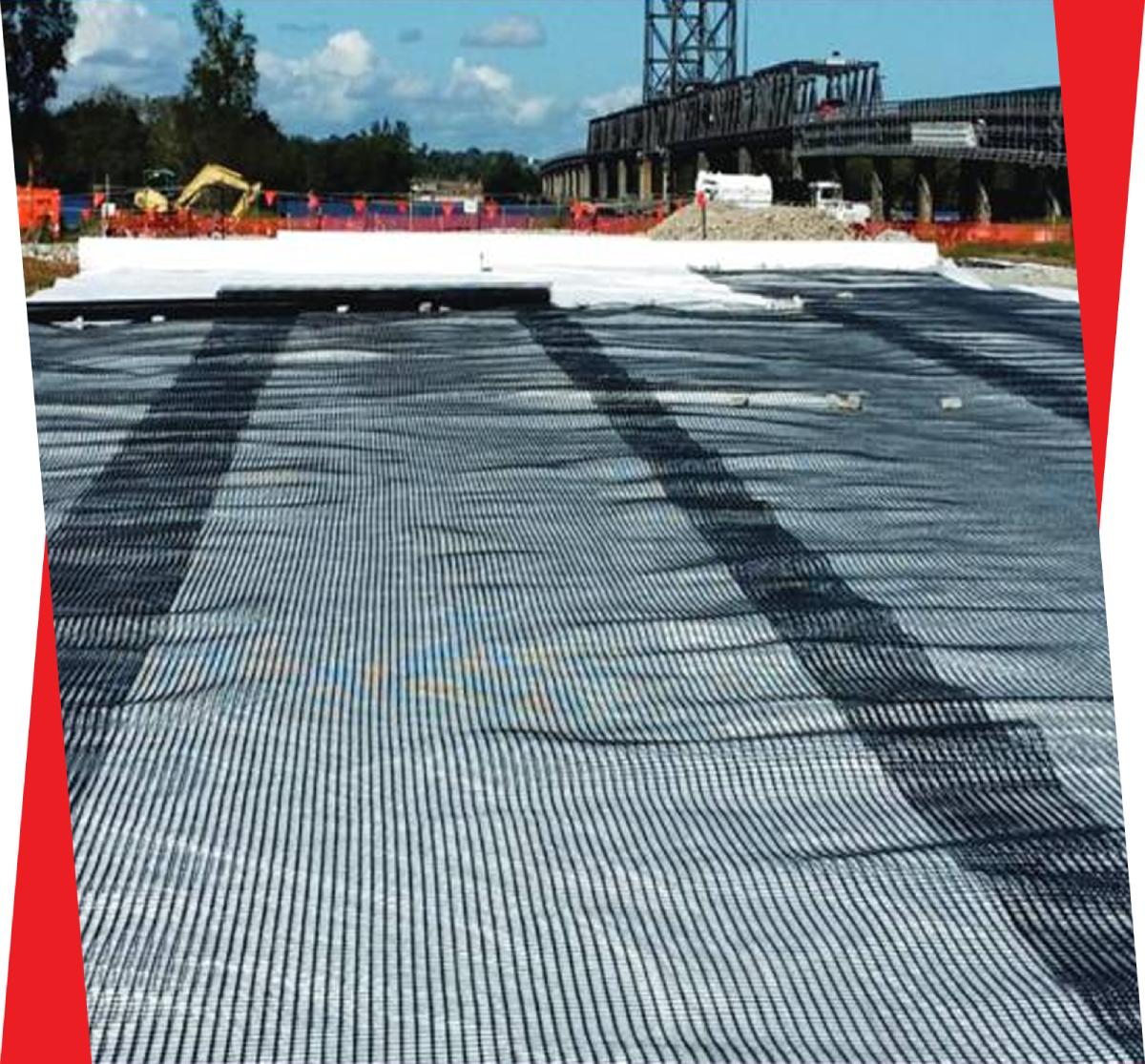
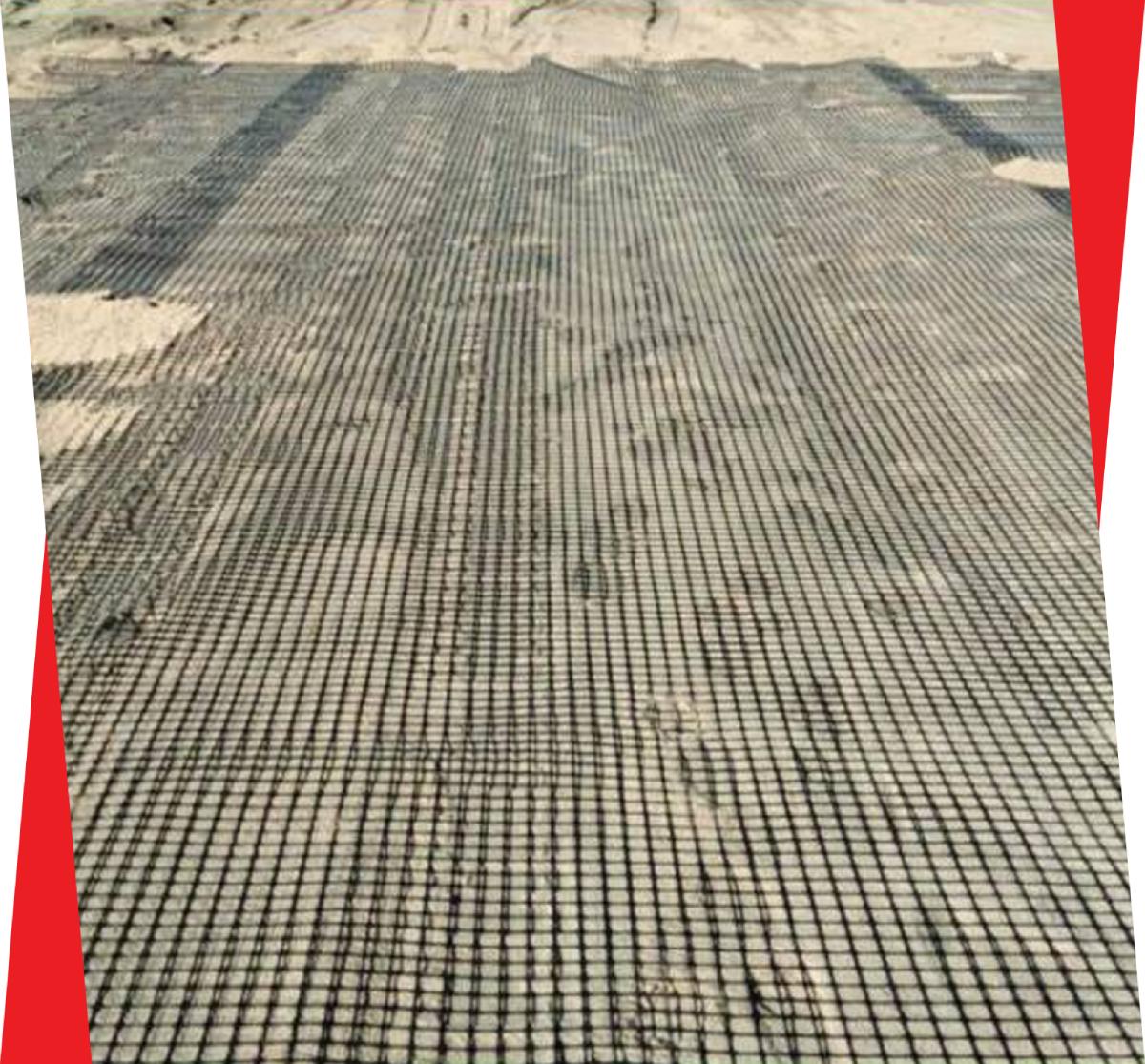
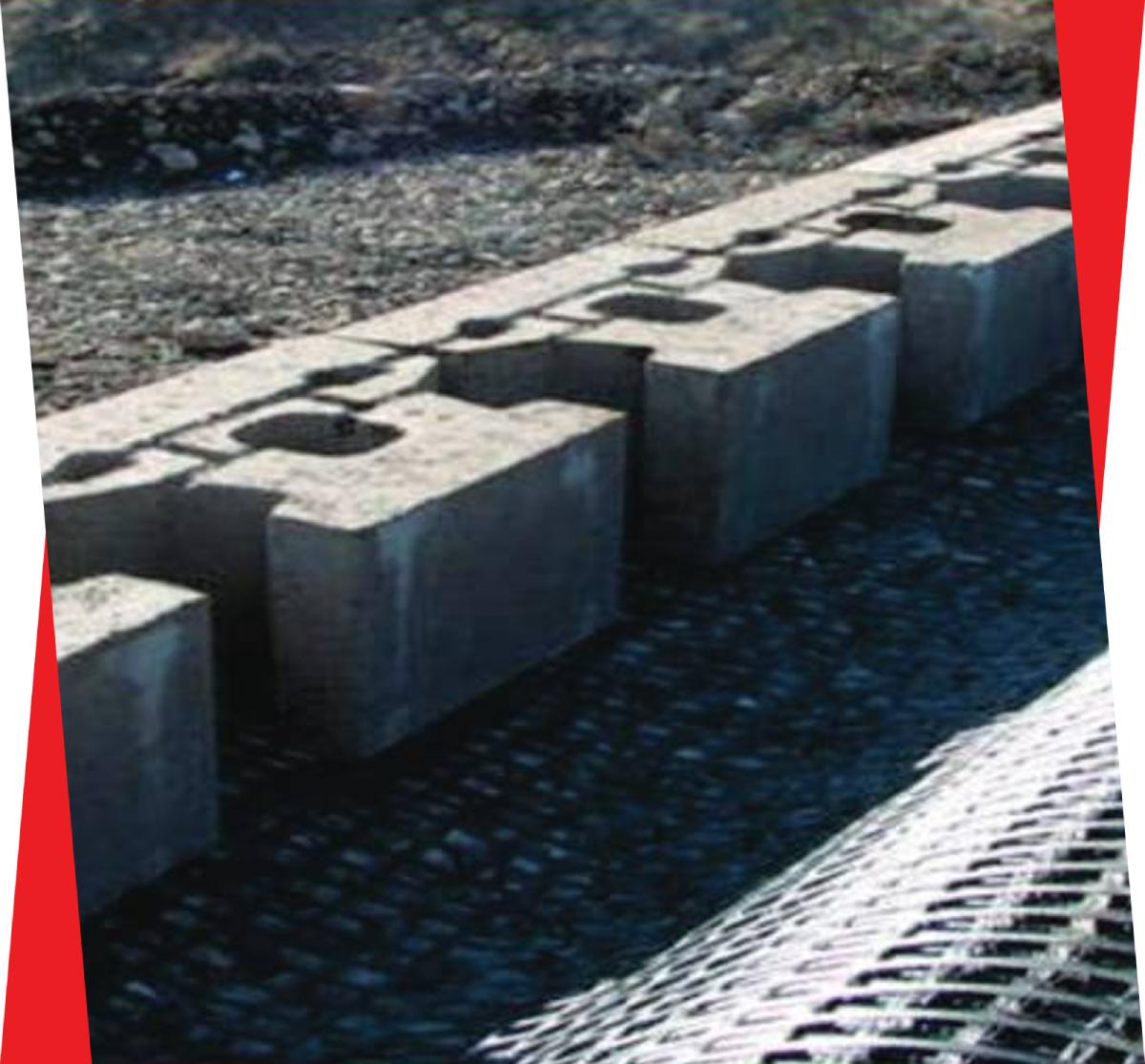
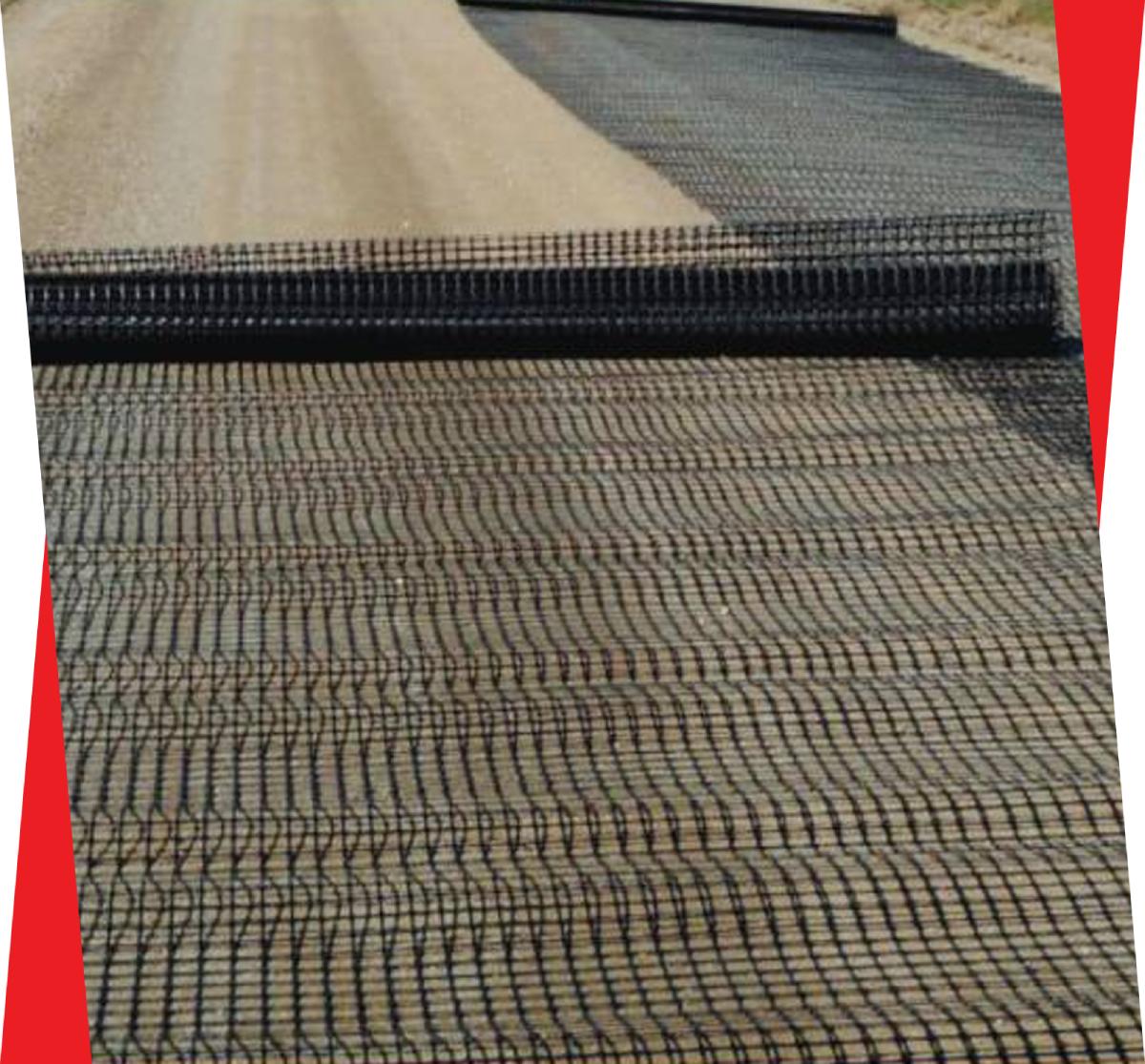
Geogrid installation
Questions buyers ask
What is geogrid?
A grid of high-tenacity polyester, PVC-coated, used as tensile reinforcement in soil. Soil and aggregate lock into its openings, so the grid takes tension the soil cannot, raising load capacity and stopping spreading.
Uniaxial or biaxial geogrid?
Uniaxial is strong in one direction: retaining walls, steep slopes, embankments. Biaxial is strong in both: road and railway subgrades.
How much does geogrid cost?
It depends on the strength grade (kN/m), roll size, quantity and delivery. For reinforced soil walls in India, specify to BIS IS 17373:2020. Send your design strength and area for a quote.